Trading Checklist: The Complete Step-by-Step Guide Every Consistent Trader Should Follow (2026)
Ask any trader who has survived multiple market cycles what separates consistency from chaos, and most will point to the same habit: they follow a checklist. Not a vague mental note, but a written, repeatable sequence of checks they run before, during, and after every trade. A checklist doesn't guess what the market will do next — it simply makes sure you show up prepared, execute according to plan, and review honestly afterward.
This guide is the most complete trading checklist resource you'll find — covering pre-market preparation, pre-trade verification, in-trade discipline, post-trade review, and weekly and monthly performance analysis. You'll get practical, copy-and-use checklists for forex, crypto, and day or swing trading, along with real examples throughout.
This article is educational only. Nothing here is financial advice, and nothing should be interpreted as a recommendation to buy or sell any financial instrument. All trading carries risk of loss.
What Is a Trading Checklist?
A trading checklist is a written sequence of conditions and actions a trader verifies before taking a trade, while managing an open position, and after closing it. It exists to remove ambiguity from decision-making by turning "does this look right?" into a series of specific, objective yes/no questions.
Purpose
The purpose of a checklist is simple: to make sure every decision you make in the market is intentional and consistent with your trading plan, not a reaction to fear, excitement, or boredom.
Benefits
- Reduces impulsive, emotion-driven entries and exits
- Creates a repeatable process you can measure and refine
- Catches mistakes before they happen, not after
- Builds confidence because you know you followed your process
- Makes post-trade review faster and more objective
Examples
A pre-trade checklist item might read: "Price has closed above the 50-period moving average on the entry timeframe." A post-trade item might read: "I recorded a screenshot and wrote a one-sentence reason for the trade in my journal." Both are specific, verifiable, and repeatable.
Why Every Trader Needs One
Consistency
A checklist makes sure you apply the same standard to every trade, regardless of how you're feeling that day.
Discipline
It's far easier to follow a rule you've already written down than to invent one in the middle of a live, moving market.
Reducing Mistakes
Most trading errors — oversized positions, missing stop losses, chasing entries — are process failures, not analysis failures. A checklist catches them before the order is placed.
Improving Execution
When entries and exits follow the same criteria every time, it becomes possible to identify which parts of your process actually work and which don't.
Building Confidence
Confidence comes from knowing you did everything correctly, independent of whether the individual trade won or lost.
Pre-Market Checklist
Run through this before your trading session begins, ideally at the same time each day:
- ☐ I have checked today's economic calendar for high-impact news
- ☐ I am aware of any major headlines affecting my markets
- ☐ I know which trading session I'm active in (e.g., London, New York, Asia)
- ☐ I have assessed current market volatility
- ☐ I have reviewed my trading goals for today
- ☐ I know my maximum daily risk limit before I start
- ☐ I feel mentally ready to trade with a clear head
- ☐ I got adequate sleep last night
- ☐ I am free of major distractions and can focus fully
If more than one or two of these items fail, many professional traders choose to sit out the session entirely rather than trade under compromised conditions.
Before Entering a Trade
Once a potential setup appears, run it through this checklist before clicking anything:
- ☐ The overall trend on my higher timeframe supports this trade direction
- ☐ I've identified relevant support and resistance levels
- ☐ My entry confirmation signal has actually triggered (not "about to")
- ☐ I know exactly where my stop-loss will be placed, based on market structure
- ☐ I know exactly where my take-profit target(s) will be
- ☐ My risk on this trade is within my defined risk-per-trade percentage
- ☐ My position size has been calculated, not estimated
- ☐ My reward-to-risk ratio meets my minimum threshold
- ☐ This setup matches a strategy defined in my trading plan
- ☐ I've taken a screenshot of the chart at the point of entry
- ☐ I can honestly rate my confidence in this setup (not forcing a trade out of boredom)
During the Trade
Discipline doesn't end at entry — it's tested most while a position is open:
- ☐ I am following my predefined trade management rules, not improvising
- ☐ I am aware of my emotional state and not reacting impulsively to price movement
- ☐ I have not moved my stop-loss further away from price
- ☐ I am not adding to a losing position out of frustration (revenge trading)
- ☐ I am sticking to the plan I made before entering, not rewriting it mid-trade
After the Trade
Once a trade is closed, the review process is where the real improvement happens:
- ☐ I recorded the profit or loss accurately
- ☐ I evaluated my execution quality — did I enter and exit as planned?
- ☐ I confirmed my risk management was followed exactly
- ☐ I noted my emotional state during the trade honestly
- ☐ I identified any mistakes, however small
- ☐ I wrote down one lesson learned from this trade
- ☐ I reviewed my entry/exit screenshots
- ☐ I logged the trade in my journal immediately, not "later"
A structured trade review process like this is what turns individual trades into compounding, data-backed improvement over time.
Weekly Trading Checklist
- ☐ Review overall statistics: win rate, average win/loss, number of trades
- ☐ Review psychology notes from each trading day this week
- ☐ Review which strategies were used and how each performed
- ☐ Review performance by asset or instrument
- ☐ Review overall discipline — what percentage of trades followed the rules exactly?
Monthly Trading Checklist
- ☐ Calculate win rate for the month
- ☐ Calculate profit factor (gross profit divided by gross loss)
- ☐ Calculate expectancy per trade
- ☐ Review maximum drawdown reached during the month
- ☐ Identify your best-performing asset
- ☐ Identify your worst-performing asset
- ☐ Identify your most profitable setup or strategy
- ☐ Identify your least profitable setup or strategy
For traders who want a deeper framework around risk metrics used in these reviews, our risk management guide covers the core calculations in detail.
How AI Improves Trading Checklists
AI tools are increasingly used to support the review side of a trading checklist — not to predict where markets will move next, but to analyze what a trader has already done. This distinction matters: AI in this context works with historical trading behavior, not future price forecasts.
Behavior Analysis
AI can scan journal entries across dozens or hundreds of trades to flag recurring behaviors, such as a pattern of moving stop-losses on losing trades.
Pattern Recognition
It can surface correlations a trader might miss manually — for example, noticing that performance consistently drops during a specific session or after a losing streak.
Psychology Insights
By analyzing journal notes and emotional tags over time, AI can highlight psychological patterns, such as a tendency toward revenge trading after two consecutive losses.
Execution Reports
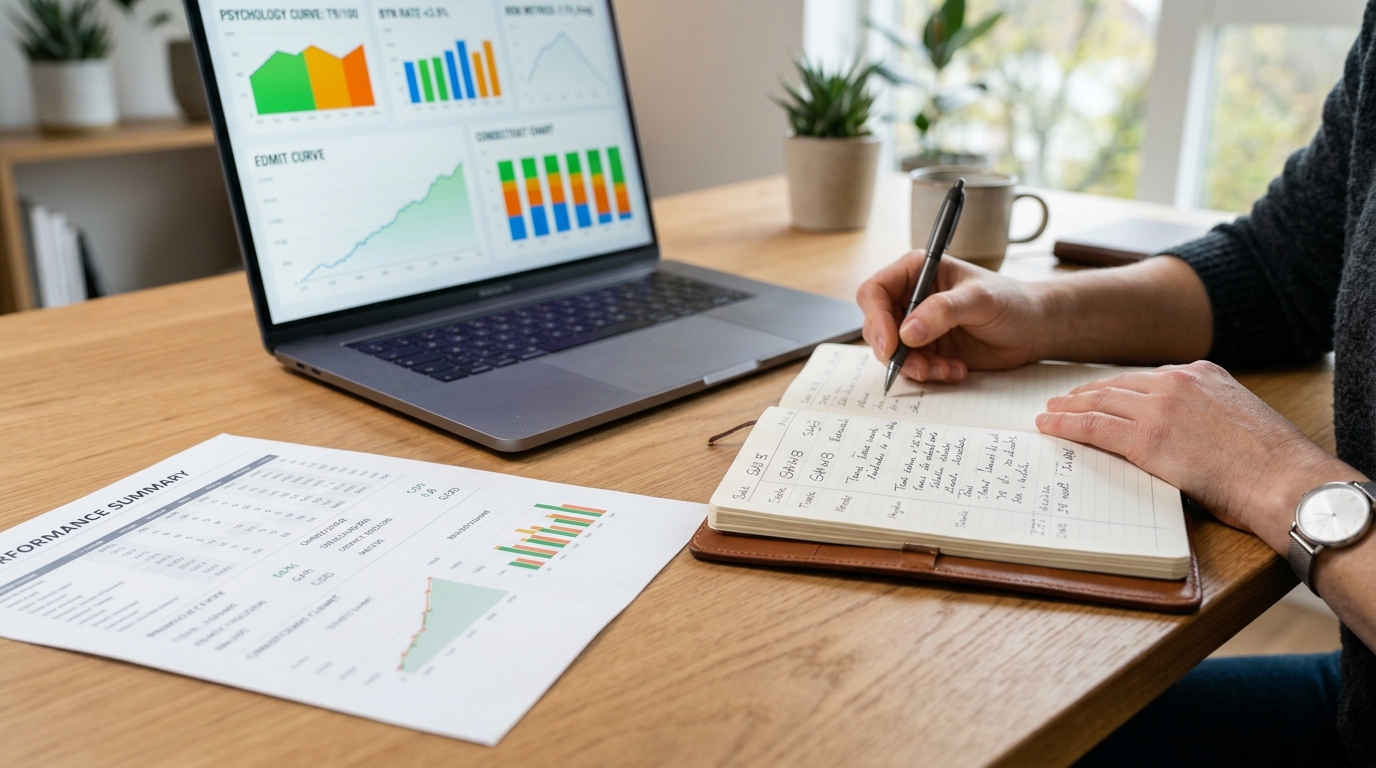
AI-generated reports can summarize how closely trades matched a trader's own written checklist, turning subjective self-assessment into an objective record.
Goal Tracking
AI can track progress toward process-based goals (like checklist adherence rate) alongside outcome-based goals (like monthly P&L).
Historical Performance
Ultimately, every AI insight here is built from a trader's own historical data. It is important to be clear: AI analyzes historical trading behavior only, and it never predicts markets or future price movement.
How DailyTraderz Helps Traders Stay Consistent
DailyTraderz is designed to make the checklist habits described above easy to maintain day after day, rather than something that fades after the first few weeks. The Trading Journal gives traders a fast way to log every trade with screenshots, notes, and tags, forming the raw data behind every meaningful review.
AI Analysis and the AI Coach then review that journal data to highlight behavioral patterns — such as inconsistent stop-loss placement or a drop in discipline late in the trading week — described in plain language rather than jargon. The Strategy Playbook lets traders define their own entry and exit checklists per setup, so every trade can be tagged and measured against the specific rules it was supposed to follow.
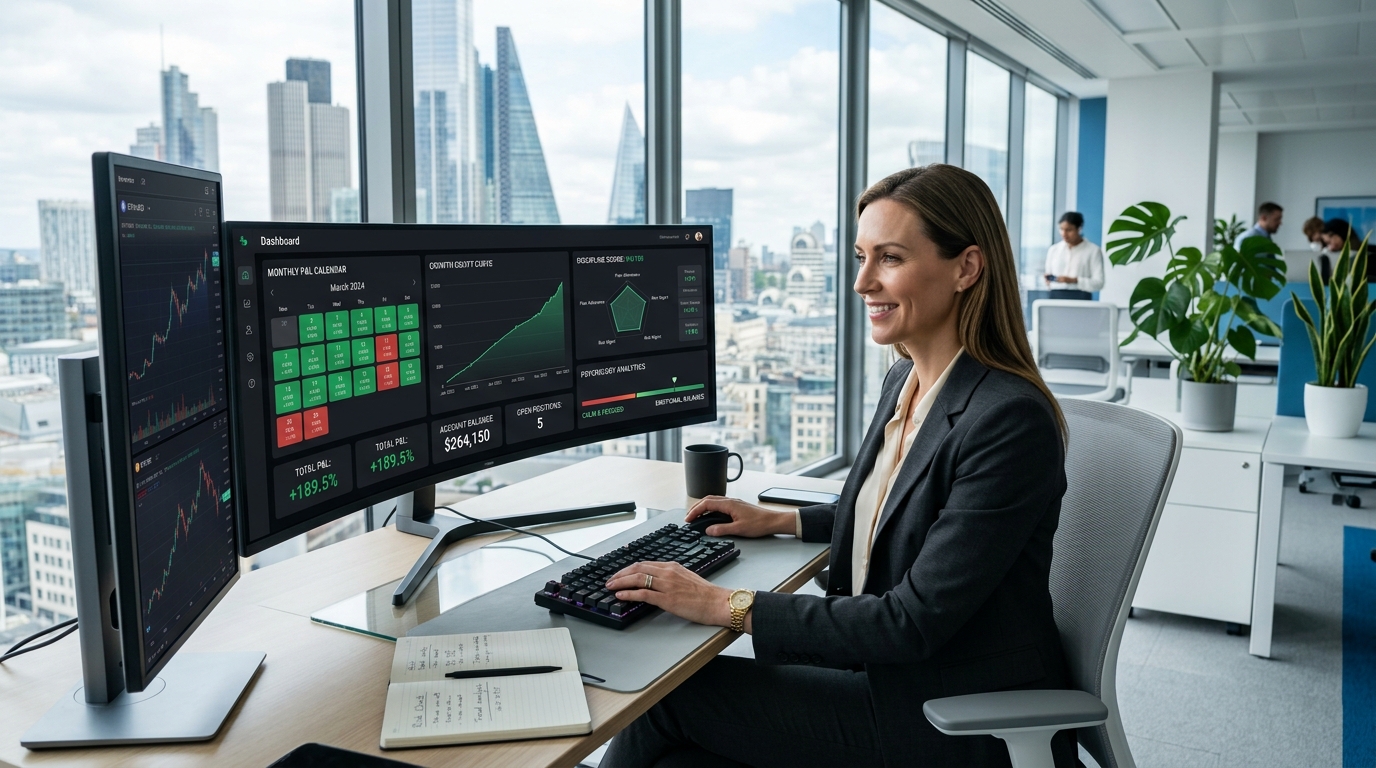
The Goals module tracks both process metrics (like checklist adherence) and outcome metrics side by side, while Asset Performance and Reports break results down by instrument, strategy, and time period. The Trade Risk Planner supports the pre-trade checklist by calculating position size and risk exposure before an order is placed, and the P&L Calendar gives an at-a-glance view of consistency over weeks and months. Traders who want a deeper look at building the underlying habits can also read our guide to trading discipline. You can explore these tools on the features page or compare plans on the pricing page.
Frequently Asked Questions
What is a trading checklist?
A trading checklist is a written list of conditions and actions a trader verifies before, during, and after a trade to ensure consistent, rule-based execution.
Why do professional traders use checklists?
Checklists reduce emotional decision-making and ensure every trade is evaluated against the same objective standard.
What should be on a pre-market checklist?
Economic calendar review, awareness of major news, current session and volatility, daily goals, risk limits, and a personal readiness check.
What should I check before entering a trade?
Trend alignment, key support/resistance levels, entry confirmation, stop-loss and take-profit placement, risk percentage, position size, and strategy match.
What should I monitor while a trade is open?
Rule adherence, emotional state, and avoiding actions like moving your stop-loss further away or revenge trading.
What should a post-trade review include?
Profit/loss recorded accurately, execution quality, risk management adherence, psychology notes, mistakes identified, and a journal entry.
How is a trading checklist different from a trading plan?
A trading plan is the broader strategy and rule set; a checklist is the practical, step-by-step tool used to verify those rules are followed in real time.
How often should I update my trading checklist?
Review and refine it during your weekly or monthly performance review, based on data rather than a single trade's outcome.
Can a trading checklist prevent all losses?
No. A checklist improves consistency and risk control, but it cannot eliminate losses or guarantee profits, as trading always involves risk.
Do day traders and swing traders need different checklists?
The core structure is similar, but day traders typically need faster, session-based checks while swing traders focus more on higher-timeframe confirmation and overnight risk.
What is a forex trading checklist?
A checklist tailored to forex markets, often including session timing, economic calendar events, and currency-pair-specific volatility considerations.
What is a crypto trading checklist?
A checklist adapted for crypto's 24/7 markets, often emphasizing volatility checks, exchange liquidity, and stricter risk limits due to higher price swings.
How do I calculate position size for my pre-trade checklist?
Position size is typically calculated from account balance, risk percentage per trade, and the distance between entry and stop-loss.
What reward-to-risk ratio should I require before entering?
Many traders set a minimum threshold, such as 1:2, meaning potential reward is at least twice the risk taken.
Why is taking a screenshot part of a trading checklist?
Screenshots create a visual record of the setup at entry, making post-trade and weekly reviews far more accurate than relying on memory.
What is a confidence score in trading?
A self-rated score reflecting how strongly a setup matches your criteria, helping distinguish high-conviction trades from forced or low-quality ones.
Why shouldn't I move my stop-loss during a trade?
Moving a stop-loss further away increases risk beyond what was planned and often reflects an emotional reaction rather than a rule-based decision.
What is revenge trading?
Revenge trading is entering a new trade impulsively, often with excessive size, in an attempt to immediately recover a prior loss.
How do I track trading psychology over time?
By logging emotional notes with every trade in a trading journal and reviewing them for recurring patterns weekly.
What is included in a weekly trading review?
Overall statistics, psychology notes, strategy performance, asset performance, and an honest discipline assessment.
What is included in a monthly trading review?
Win rate, profit factor, expectancy, maximum drawdown, and identification of best/worst assets and setups.
What is profit factor?
Profit factor is gross profit divided by gross loss over a given period, used as a measure of overall strategy efficiency.
What is trading expectancy?
Expectancy estimates the average amount you can expect to win or lose per trade, based on historical win rate and average win/loss size.
Can AI predict which trades will win?
No. AI trading tools analyze historical behavior and patterns; they do not predict future market movement or guarantee trade outcomes.
How does AI support a trading journal?
AI can review journal entries to identify behavioral patterns, execution consistency, and psychological trends across many trades.
Is a trading checklist useful for beginners?
Yes — beginners often benefit the most, since a checklist provides structure and reduces reliance on incomplete experience or intuition.
How long should a pre-trade checklist take to complete?
Ideally under a minute or two — a checklist that's too long often gets skipped entirely during live trading.
Where can I find educational resources on risk and trading basics?
Resources like the CFTC's Learn and Protect section, FINRA's investor education, and BabyPips offer helpful foundational material.
What does CME Group Education offer traders?
CME Group Education provides resources on futures markets, contract specifications, and how scheduled economic events affect volatility.
How does DailyTraderz support checklist-based trading?
DailyTraderz combines a Trading Journal, Strategy Playbook, AI Coach, Goals tracking, and performance reports to help traders log, review, and refine their checklist adherence consistently.
What's the biggest mistake traders make with checklists?
Skipping steps under time pressure or emotional stress — the exact moments when a checklist matters most.
Conclusion
Consistent trading results don't come from predicting the market correctly more often — they come from following a repeatable process regardless of what the market does. A trading checklist is the practical tool that makes that process real: it turns your trading plan into a series of specific checks you can follow before, during, and after every trade, and it gives you an honest record to review every week and month.
Build your own checklist using the framework above, keep it simple enough to actually use under pressure, and commit to reviewing it regularly. Platforms like DailyTraderz can support that process by helping you journal every trade, apply AI-assisted behavioral analysis to your history, and track your consistency over time — helping your checklist stay a living part of how you trade, not a document you write once and forget.
This article is for educational purposes only and does not constitute financial advice. Trading financial instruments carries risk, including the risk of loss of capital.