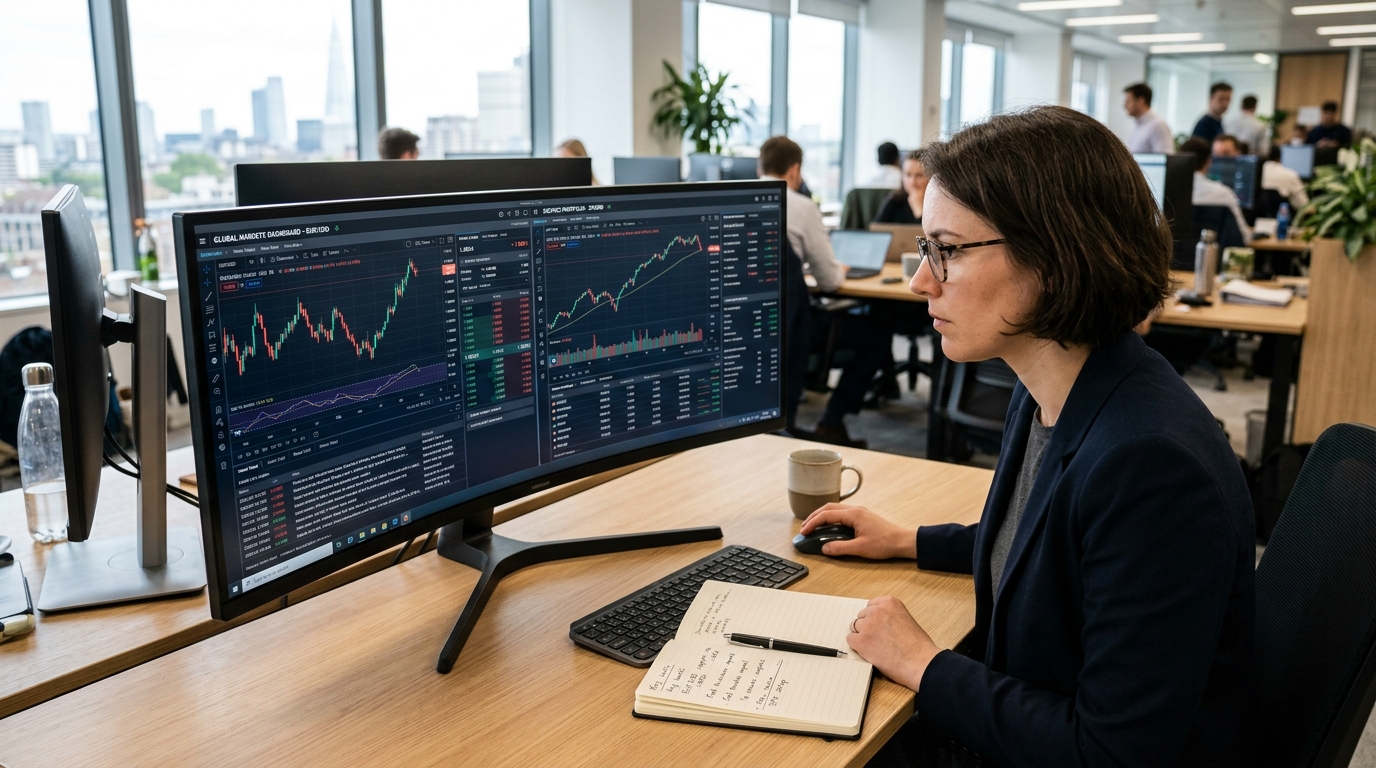
A spreadsheet can get you started, but most traders eventually run into the same wall: manual entry takes time, formulas break, and there's no real way to see behavioral patterns without scrolling through hundreds of rows by hand. That's the gap trading journal software is built to close. It's not about finding a shortcut to better trading, it's about organizing your own data clearly enough to actually see what's happening in your decisions, risk management, and execution over time.
This guide walks through what trading journal software actually does, which features are worth prioritizing, and how to choose a platform that fits the way you trade.
What Is Trading Journal Software?
Trading journal software is a dedicated platform for logging, organizing, and analyzing your trades, replacing manual spreadsheet work with automated statistics, visual dashboards, and often deeper behavioral analysis. Its core purpose is the same as any trading journal: creating an accurate record you can review and learn from. The difference is in how much of that organizing work the software does for you.
Beginners benefit from software mainly through structure. Instead of deciding which fields to track and building formulas from scratch, most platforms provide a ready-made framework for entry, exit, risk, and results. Experienced traders tend to benefit more from the deeper analytics: strategy-level breakdowns, psychology tracking, and automated reports that would take considerable manual effort to replicate in a spreadsheet.
Essential Features Every Trading Journal Software Should Include
Not all platforms offer the same depth. Here's what tends to separate genuinely useful trading journal software from a basic online trade log:
| Feature | Why It Matters |
|---|---|
| Trade Tracking | The foundation of any journal, ideally supporting multiple asset classes |
| Performance Dashboard | A single view of win rate, risk-reward, and overall equity curve |
| P&L Calendar | Visualizes profitable and losing days for pattern recognition |
| Risk Analytics | Tracks position sizing and risk consistency across trades |
| Trading Psychology | Captures emotional state and behavioral tendencies over time |
| Strategy Playbook | Links trades to specific setups for strategy-level review |
| AI Behavioral Analysis | Surfaces patterns in your own trading behavior across a larger sample |
| Trade Screenshots | Preserves visual context of each setup for later review |
| Goals | Measures progress against specific, self-defined trading objectives |
| Reports | Automated weekly or monthly summaries without manual building |
| Cloud Sync | Keeps your journal available and backed up across devices |
| CSV Import | Allows bulk trade data to be added without manual entry |
| Broker Import (optional) | Reduces manual entry further by syncing trade data directly |
| Manual Entry | Still valuable for traders who prefer adding context by hand |
| Responsive Mobile Design | Allows quick review or note-taking from a phone between sessions |
Excel vs Trading Journal Software
Both approaches can work, depending on trading volume and what you're trying to get out of the review process.
| Category | Excel | Trading Journal Software |
|---|---|---|
| Ease of Use | Requires spreadsheet skill to scale | Designed for traders, minimal setup |
| Automation | Limited to formulas and macros | End-to-end automated calculations |
| Reporting | Manual, built from scratch each time | Automated, scheduled reports |
| Charts | Built manually, time-consuming | Generated automatically |
| Psychology Tracking | Notes only, no structure | Dedicated fields, sometimes AI-assisted |
| Strategy Analysis | Requires custom tagging system | Often built-in via Strategy Playbook features |
| Risk Metrics | Formula-dependent, error-prone | Calculated and monitored automatically |
| Long-Term Scalability | Slows down and becomes cluttered at scale | Built to handle large trade histories |
How Modern Software Helps Traders Improve
The value of trading journal software isn't in the data collection itself, it's in what that organized data makes possible during review. A few areas where this shows up clearly:
Performance review
Automated statistics turn a vague sense of "how it's been going" into an actual, reviewable data set covering win rate, average risk-reward, and drawdown.
Pattern recognition
With a large enough trade history, software can surface tendencies that are difficult to notice manually, like weaker performance during a specific session or after consecutive losses.
Mistake tracking
Recurring errors, like ignoring stop losses or sizing up impulsively, become harder to overlook once they're visible across dozens of logged trades rather than scattered memories.
Discipline
Comparing actual trades against a stated plan or Strategy Playbook makes it clear whether rules are being followed consistently or only when convenient.
Weekly reviews
Automated dashboards make a structured weekly review realistic, rather than something that gets skipped due to the time it would take manually.
Monthly reviews
Longer-term reports help separate short-term variance from genuine, sustained changes in performance.
Strategy tracking
Tagging trades to specific setups reveals which strategies are actually contributing to results and which ones may be quietly underperforming.
Behavioral analysis
AI-assisted tools can highlight emotional and behavioral patterns across a trader's history, though the analysis is about the trader's own decisions, not about predicting the market.
How to Choose the Best Trading Journal Software
With several platforms available, a few practical factors are worth weighing before committing to one:
- Ease of use: A platform you'll actually use consistently matters more than one with every possible feature but a confusing interface.
- Reports: Check whether performance summaries are generated automatically or require manual setup.
- AI features: If behavioral or psychology tracking matters to you, confirm what the AI actually analyzes, your own trading history, not market predictions.
- Cloud access: Useful if you want to review performance across multiple devices or away from your main trading setup.
- Pricing: Compare monthly versus one-time-purchase models, and check whether a free trial is available before committing.
- Security: Especially relevant if the platform connects directly to a broker account through auto-sync.
- Customization: Confirm whether you can adjust fields, tags, and strategy categories to match how you actually trade.
Common Mistakes When Choosing Trading Software
- Choosing only by price: The cheapest option isn't useful if it's missing features you'll actually need, like psychology tracking or strategy analysis.
- Ignoring psychology tools: Behavioral patterns are often a bigger factor in long-term results than most traders initially assume, and skipping this feature limits what you can actually learn.
- No strategy tracking: Without the ability to tag trades by setup, it's difficult to know which strategies are actually working.
- No performance reports: A platform that stores data but doesn't summarize it clearly makes regular review harder than it needs to be.
- Not reviewing data: Even the best software provides no benefit if the reports and dashboards are never actually looked at.
This kind of consistent, structured self-review is well supported by broader behavioral finance research, which links disciplined performance analysis to more consistent decision-making over time, regardless of the specific strategy being used.
Frequently Asked Questions
What is trading journal software used for?
It's used to log, organize, and analyze trades automatically, replacing manual spreadsheet work with dashboards, statistics, and often behavioral insights.
Is trading journal software better than Excel?
For higher trade volumes, generally yes, due to automation and reduced manual error. For occasional traders, a spreadsheet may still be sufficient.
Do trading journal software platforms give trading signals?
No. Legitimate trading journal software analyzes your own historical trades and behavior. It doesn't predict market movement or provide financial advice.
Is trading journal software suitable for beginners?
Yes. Many platforms offer a simpler structure than building a spreadsheet from scratch, making it easier for beginners to start tracking consistently.
What is a Strategy Playbook in trading software?
It's a feature that lets traders tag trades to specific strategies, enabling performance review at the setup level rather than just across the whole account.
Does trading journal software work for forex and crypto?
Most modern platforms support multiple asset classes, including forex and crypto, though it's worth checking specific broker or exchange compatibility beforehand.
Is there free trading journal software available?
Some platforms offer a free tier or trial with limited features. Our guide to the Free Trading Journal options covers what's realistic to expect at no cost.
How much does trading journal software typically cost?
Pricing varies widely, from free tiers to monthly subscriptions or one-time purchases. It's worth comparing based on which features you'll actually use.
Can I switch from a spreadsheet to trading journal software without losing data?
Most platforms support CSV import, making it possible to bring historical trade data over from an existing spreadsheet.
What's the difference between a trading log, trading diary, and trading journal software?
A trading log records raw trade facts, a trading diary captures emotional context, and trading journal software typically combines both with automated analytics. Our guides on the Trading Journal Complete Guide and Trading Log cover each concept in more depth, and our roundup of the Best Trading Journal Apps compares several platforms side by side.
Ultimately, the best trading journal software isn't necessarily the one with the longest feature list. It's the one you'll actually keep using consistently to review your decisions, monitor risk, improve discipline, and refine your strategies over time. DailyTraderz is one example of this newer generation of tools, combining a Strategy Playbook, P&L calendar, AI behavioral insights, and a performance dashboard, and it's available with a free trial if you want to see whether it fits how you trade.