Most forex traders spend the bulk of their time and energy looking for a better entry. A cleaner confirmation, a tighter stop, a more reliable indicator combination. Far less time typically goes into reviewing the trades that have already happened, even though that review process is where most of the actual, lasting improvement tends to come from.
A forex trading journal is the system that makes that review possible. It's not a shortcut to better results, and no journal can promise that. What it offers is a long-term improvement system: a way to see your own decisions clearly enough to actually learn from them, trade after trade, week after week.
What Is a Forex Trading Journal?
A forex trading journal is a structured record of every trade taken in the currency markets, capturing not just the outcome but the reasoning, risk, and psychological context behind each decision. Its purpose extends well beyond simple recordkeeping.
Purpose
The core purpose is to create an objective, written record that can be reviewed later, rather than relying on memory, which tends to be selective and shaped by emotion after the fact.
Benefits
A well-maintained journal supports better risk management, clearer identification of which strategies and pairs actually work for you, and a more honest view of your own discipline over time.
Recording trades versus reviewing them
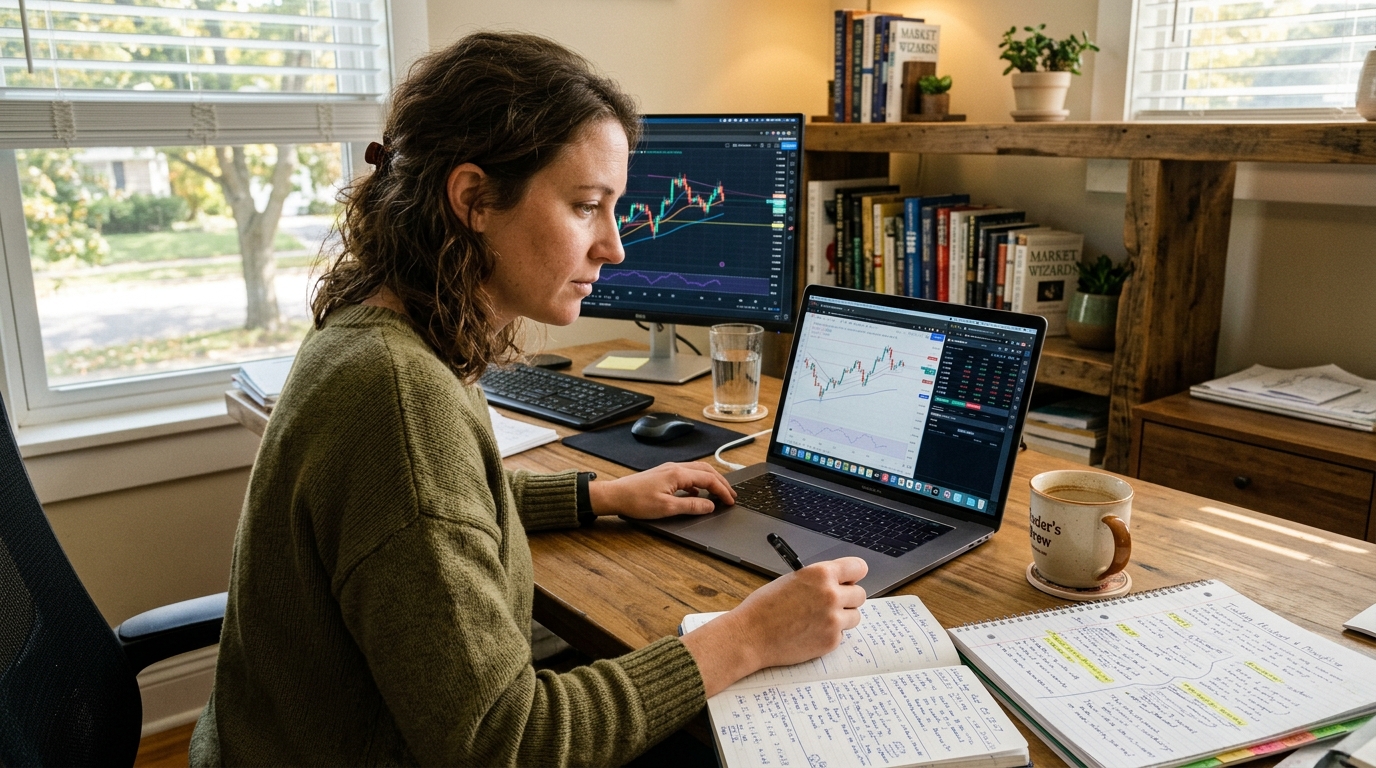
This distinction matters more than it might first appear. Recording a trade only captures what happened. Reviewing it is where the learning actually takes place, comparing the trade against your plan, checking whether risk rules were followed, and asking what, if anything, should change going forward. A journal that's only ever recorded and never reviewed provides very little practical value.
Why Every Forex Trader Needs a Journal
Building discipline: Comparing what you actually did against your stated trading plan is one of the clearest ways to see whether you're genuinely following your own rules or simply assuming you are.
Reducing emotional decisions: Recording emotional state alongside trade outcomes makes patterns like fear-driven exits or overconfident entries visible, rather than something vaguely sensed but never confirmed.
Tracking performance: A journal turns a general impression of "trading has been fine lately" into an actual data set covering win rate, average risk-reward, and drawdown.
Improving consistency: Consistency isn't about winning every trade, it's about repeating the same disciplined process, and a journal is the clearest way to measure whether that's genuinely happening over time.
Developing confidence: Reviewing a history of trades that followed a defined process, regardless of individual outcomes, tends to build steadier confidence than chasing short-term results alone.
What Should Every Forex Trading Journal Include?
Consistency in what gets recorded matters more than length. A thorough forex trading journal entry typically covers:
| Field | Why It Matters |
|---|---|
| Currency Pair | Identifies which pairs perform best with your strategy |
| Entry Price | Confirms actual entry versus planned entry |
| Exit Price | Records where the trade was actually closed |
| Stop Loss | Shows whether risk was defined before entering |
| Take Profit | Reveals whether targets were realistic and consistently used |
| Risk % | Tracks whether position sizing stayed within your own rules |
| Lot Size | Standard forex sizing metric for accurate risk calculation |
| Trade Duration | Reveals whether your strategy tends to work better short-term or longer-term |
| Trading Session | Shows which session (London, New York, Asian) suits your approach best |
| Screenshot | Provides visual context for reviewing setups later |
| Psychology Notes | Captures emotional state and decision-making context |
| Lessons Learned | Converts each trade into a specific, actionable takeaway |
Common Mistakes Traders Discover by Journaling
One of the more surprising benefits of consistent journaling is how often it reveals habits traders didn't realize they had. A few patterns come up repeatedly:
- Overtrading: A written log often reveals a far higher trade count than a trader initially estimated, particularly during volatile weeks.
- Revenge trading: Reviewing timestamps and psychology notes frequently shows a cluster of impulsive trades immediately following a loss.
- Ignoring risk rules: Position sizing that quietly increases after a winning streak is a pattern that's much easier to see in a journal than in the moment.
- Moving stop losses: A log makes it clear how often a stop was adjusted mid-trade, rather than honored as originally planned.
- Entering without confirmation: Journaling entry reasoning often exposes trades taken on partial setups that didn't fully meet the trader's own criteria.
- Poor position sizing: Inconsistent lot sizes across similar setups become obvious once they're logged side by side.
- Trading during news: A time-stamped journal can reveal a pattern of weaker results around high-impact news releases, even if that connection wasn't obvious in the moment.
Weekly and Monthly Trade Reviews
A journal creates the most value when it's reviewed on a regular schedule, rather than left to accumulate without ever being revisited.
Winning trades: Review not just that they won, but whether they followed your plan. A win taken outside your strategy is still a red flag worth noting.
Losing trades: Check whether the loss was a normal result of a sound process, or the result of a rule being broken.
Best setups: Identify which specific strategies or pairs are consistently producing your strongest results.
Worst setups: Look honestly at which setups may be dragging down overall performance, even if they occasionally produce a win.
Psychology: Scan emotional notes for recurring themes, like consistent anxiety before entries or overconfidence after wins.
Consistency: Compare how closely actual trades matched your defined plan across the week or month.
Performance trends: Look at monthly data specifically to separate short-term variance from a genuine shift in results over time.
How AI Is Changing Forex Journaling
Reviewing a large volume of trades manually, especially across multiple currency pairs and sessions, takes real time. AI-assisted analysis has become a meaningful part of how modern forex journals handle this.
AI Analysis can process a full trade history far faster than manual review, surfacing statistics and summaries automatically.
Behavior pattern detection identifies recurring tendencies, like weaker performance after consecutive losses or during a specific session.
Psychology review scans emotional notes across many trades for recurring themes that would be difficult to spot manually at scale.
Performance summaries translate raw statistics into plain-language overviews of what changed and what stayed consistent.
Strategy tracking aggregates results by tagged setup, showing which strategies are actually contributing to overall performance.
Asset performance breaks down results by currency pair, revealing which markets genuinely suit your approach.
Trade Risk Planner tools calculate position size and risk before a trade is placed, supporting discipline at the decision point rather than only in review afterward.
It's worth stating this clearly: AI in this context never predicts markets or provides financial advice. Its role is limited to analyzing a trader's own historical behavior and data. Any tool suggesting otherwise is doing something fundamentally different from journaling.
How DailyTraderz Helps Forex Traders Stay Consistent
DailyTraderz is one platform built around this fuller definition of forex journaling. Its AI Analysis surfaces behavioral and performance patterns across a trader's history, while an AI Coach feature is designed to summarize trends and highlight areas worth focused attention, framed entirely around the trader's own past behavior rather than market predictions.
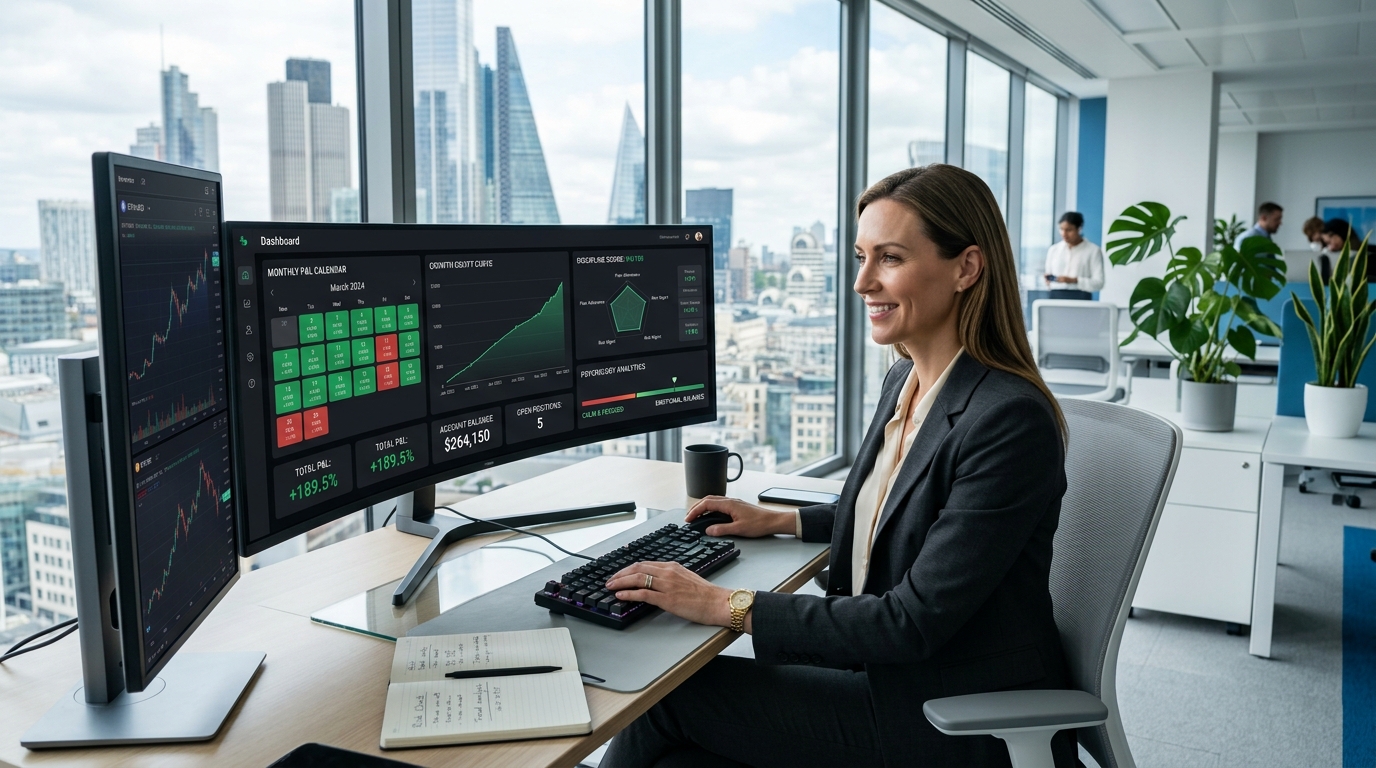
The platform's Strategy Playbook allows trades to be tagged and reviewed by setup, and Asset Performance breaks results down by currency pair and instrument. Its Elite plan includes a Trade Risk Planner for calculating position size and risk before entering a trade. Automated Reports and Goals round out the picture, alongside a P&L Calendar for visualizing daily results at a glance. The overall focus stays on discipline, psychology, and long-term consistency rather than forecasting future price movement.
Frequently Asked Questions
What is a forex trading journal?
It's a structured record of every forex trade, including entry, exit, risk, session, and psychological context, used to review and improve trading decisions over time.
Why do professional forex traders keep a journal?
Professional traders rely on journaling to build discipline, track performance objectively, and identify behavioral patterns that would otherwise be difficult to notice through memory alone.
What should I record for every forex trade?
At minimum: currency pair, entry, exit, risk percentage, strategy used, trading session, and a short note on emotional state and lessons learned.
How often should I review my forex trading journal?
A weekly review is generally recommended, with a broader monthly review to track longer-term trends and separate normal variance from genuine performance shifts.
Can a forex trading journal guarantee better results?
No. A journal cannot guarantee improved results. It can help identify mistakes and patterns that, once addressed, may support more disciplined execution over time.
Does AI in a forex trading journal predict currency movements?
No. Legitimate AI-assisted forex journals analyze a trader's own historical trades and behavior. They don't predict market movement or provide financial advice.
What is a Strategy Playbook in forex journaling?
It's a feature that allows trades to be tagged to specific strategies, enabling performance review at the setup level rather than just across the whole account.
Is Excel good enough for a forex trading journal?
For lower trade volumes, a spreadsheet can work. As trading frequency and the need for automation grow, dedicated software tends to save significant time and reduce manual errors.
How does journaling help with forex psychology specifically?
Recording confidence and emotional state before and after trades makes patterns like fear-driven exits or revenge trading visible, rather than something only vaguely sensed.
What is the best way to track forex trading sessions?
Logging the session (London, New York, or Asian) for each trade allows performance to be reviewed by time of day, often revealing meaningful differences in results.
Should I journal forex trades that break even?
Yes. Breakeven trades still provide useful information about execution and decision-making, even without a clear win or loss to analyze.
How do I choose the right forex trading journal tool?
Consider whether psychology tracking, strategy playbooks, and automated risk analytics are included. Our guides to the Trading Journal App and Trading Journal Software compare features in more depth, and our Trading Journal Online guide covers cloud-based access specifically.
For a broader foundation, our Trading Journal guide covers the full concept from the ground up, and our Day Trading Journal guide looks at how these habits apply to high-frequency trading specifically. Our deeper look at the trading psychology journal covers the emotional side of trade review in more detail. If cost is a factor, our guide to the Free Trading Journal options walks through what's realistic to expect before paying for software.
This kind of structured, disciplined record-keeping is also consistent with investor education resources from the FINRA Investor Education center, risk disclosure guidance published by the CFTC's Learn and Protect resources, and behavioral finance research from the CFA Institute, all of which emphasize disciplined review and risk awareness as core habits for market participants.
Conclusion
Finding a better entry will always feel like the more exciting part of trading. But consistent, honest trade review is what actually separates traders who improve steadily from those who repeat the same mistakes indefinitely. A forex trading journal, used consistently and reviewed regularly, is the tool that makes that kind of improvement possible.
If you're looking for a modern, AI-powered forex trading journal built around discipline, psychology, and long-term performance rather than predictions, DailyTraderz is worth exploring as one option designed with exactly that focus.